Monday, 14 May 2012

'Meet the Authors' in June in Wirksworth


Meet the Authors
In June in Wirksworth
7.30-9.30 Red Lion Function Room
£5 per ticket
Available in Traid Links or on the door

Tricia Durdey and Andy Miller  6th June
Wirksworth authors talking about their writing

Christine Palmer                     13th June
Walking back to Happiness’

Lynn Knight                             20th June
Lemon Sherbet and Dolly Blue: the story of an Accidental Family’

Steven Dunne                          27th June
The Reaper ’ and  ‘The Disciple’

This year’s special event : a Poetry Stroll
Friday 15th June, meeting at 7.00 in the Market Place

Make the most of your evening and treat yourself to a meal
at the Red Lion

Tuesday, 8 May 2012

Overview of contents


This book is an anthology of published and unpublished prose and poetry written over a period of more than 40 years. It is presented in four sections:
  • The first - 'Hey You!' - consists of a short set of early poems written between  1964 and 1970.
  • The second section is a reprint of a booklet published in 1988 entitled 'Hanging in the Balance' which received very favourable reviews in the climbing and mountaineering press. Terry Gifford, the Director of the International Festival of Mountaineering Literature judged that 
  • '... this brave, fragile pamphlet of four essays and six poems... is the best writing I've read in ages. Better than whole books of empty narrative, this little bit of autobiography climbs through the important things in life.' (High Magazine, 1988). 
  • A leading British rock climber and published poet, Ed Drummond, also gave a very positive review in Mountain Magazine (1988)
  • '... Who can say when or how hope springs? Today, like a ray of sunlight, a small book has landed on my desk ... it may already be a collector's item. For there is a breath of humanity in this book'
  • 'Hanging in the Balance' has long been out of print and is reprinted here in full.
  • Section three is entitled 'Away and Away' and comprises four essays and ten poems. Among the latter, 'Two Glasses' was Highly Commended in the 1989 Mary Wilkins Memorial Poetry Competition and 'Attempting to Interfere' won First Prize in the Yeovil Literary Prize for Poetry. The Yeovil Prize judge, poet,  novelist and BBC producer, Daisy Goodwin, described this poem as having 
  • '... a distinctive voice...' and being '... mysterious but repaying a close reading'
  • The final section, 'Peninsular Days', consists of four essays that describe various segments of the South West Coast Path, a 630-mile walk undertaken in stages over 8 years by the author. This walk follows the spectacular coastal scenery of Devon, Cornwall and Dorset in a continuous line from Minehead to Lands End and then Poole Harbour.
Collected together, many of these pieces cohere around themes of risk and danger, tests of commitment, and the exhilaration in being alive. Presented  alongside the joys and challenges to be experienced in human relationships, many of these themes serve as metaphors for the others.

Sunday, 29 April 2012

Extract from 'The local climbing club is ten years old'


If, along with my eight gramophone records, I could take one memory, it would be of the couple of hours around the fall of night in mid-summer.


Arms and legs would feel stretched and loose. The last figures, still in T-shirts and shorts, would be leaving the crag. The track would be unclear and the pace intense. Gear would clink like reindeer bells in the night. Sitting on the wall outside the chip shop in the warm air, the quiet of the village would make the skin tingle. Stepping through the pub door a wave of human warmth would break. There would be all the old stories again, all the anticipation and interjection, the shared bedtime tales that never grow stale, the laughter that bursts without ever a moment of calculation, the eyes alive, the bodies close together and all that blood and adrenalin coursing to a common pulse.


Ten years old?


May you stay forever young!   


(nb. 'While Giants Sleep' does not contain photographs. These have been included only for the purposes of this blog. Photographs are taken from Google Images ) 

Saturday, 21 April 2012

From the blog 'Four Thousand Lives Lost'

Alastair Walker, author of 'Four Thousand Lives Lost' has posted these very kind remarks on his blog:


'One of the guys I met on the square rigger was Andy Miller, a multi-faceted person being a professor of educational psychology as well as a poet, author, rock climber and trainee sea captain!  His current book outside his professional domain is “While Giants Sleep”. Having had the privilege of reading it over the last couple of days I can thoroughly recommend it. It is quite unlike anything I have read previously, being an eclectic mix of poetry and prose covering a variety of topics and written over a forty year period.   It is an intensely personal reflection on some of the major influences on Andy’s life and it also externalises his feelings on activities that have been challenging but which have given great satisfaction. There is a moving description of trekking across the Annapurna Range from Nepal to Tibet as well as a tense recall of a near-fatal incident on a cliff in the Peak District. I have learned something about why people climb that I never understood before'.


The comment about me being a trainee sea captain is, of course, intended to be ironical. I can't tell my aft from my starboard. I'm reading Alastair's book about the inquiries into the sinking of the Titanic and three other vessels in the same period. He's a cracking writer and story teller and  can thoroughly recommend his book.

Friday, 6 April 2012

Conversation with John Lindley

AM: We only met for the first time in 2011 but I have been delighted to do so as I have been aware of some of your writing about Bob Dylan for many years. I hadn't realised that you were a poet and that you have managed to develop a career as such. Can I start by asking what your stated occupation is on your passport? 


JL:  It's been a pleasure meeting you too, Andy. My old passport, now expired, doesn't record an occupation. If it did, it would now be 'Poet & Creative Writing Tutor'. I've read many views on the self-application of the word 'poet', varying from the “Nobody has the right to call themselves a poet” (what should I say though – 'plumber'?) to Roger McGough's remembrance of Heaney once saying something along the lines of “If you write a poem - you're a poet”. I've always liked the remark by Tony Curtis (the poet, not the actor) that “Poets often go disguised as respectable people”.


AM: Before we talk about your current work and the significant milestones on your journey to this point, can I ask about your early forays into writing creatively? Was there one piece that you can remember as the very first poem or story or whatever? How old were you? And was this the first piece that provided that vital external acknowledgement and validation, the first piece you had published?   


JL: My first poem, written when I was about 13 or 14, was about Muhammad Ali who I idolised at that time. The poem, as was the case with most of those in my teens, was awful! The first piece I had published was in my local newspaper and I soon learned that that doesn't really count, as local rags will publish almost anything. I was in my mid-twenties before I began submitting work to magazines and my first acceptance was by the New Manchester Review.
AM: Muhammad Ali, eh? I’d guess that most teenage lads who idolise a boxer might themselves be tempted to climb into the ring at a local youth club or some dive down the darker end of town. I’m wondering why you chose a literary response? Presumably you were a reader, maybe a writer too, as a child? Can you describe your early literary influences – people, books etc - before that very first poem and also the subsequent period until the acceptance by the New Manchester Review?        

JL: All of my early poems were sports related. I was a football fanatic and boxing was not something I ever imagined would capture my imagination. For a few years though, I was subscribing to U.S boxing magazines and reading what I could find on the history of the sport. Ali was the catalyst for all this: the most spellbinding and charismatic figure I'd encountered – both in the ring and out of it. With the stripping of his title following his Vietnam draft refusal my interest in boxing ceased immediately. Why a literary response? Well, English was the only subject at school in which I excelled to any degree and the poetry of others (although I can't recall anyone specifically) was already beginning to appeal, even before I entered my teens. Around the ages of 15 and 16 the Liverpool Poets – McGough, Patten and Henri – were influences outside the school curriculum (though, strangely, not the Beats whose work I distrusted), whilst in school the WW1 poets were an inspiration, if not an obvious influence on my writing. Dom Moraes, an Indian poet writing in English, had a huge influence (on occasion, almost to the point of plagiarism!) on my early attempts at poetry. I have a collection of his, borrowed, and inadvertently never returned, from Stockport Library in 1972. I hope that no librarians will be reading this on your Blog, Andy. I fear that my fine, for long overdue return, will be astronomical.


AM: Well, my Blog needs all the readers it can get but I think you are safe as librarians, sadly, seem to be fighting for survival at the moment in the currently philistine political climate (imo). Your response above, John, raises a number of interesting points – and coincidences. I’m conducting two other interviews concurrently with this one, the first with my friend the Derbyshire poet, David Duncombe, who was a very keen boxer and the other with my old school friend, Roger Draper, my ‘first editor’, who introduced me to the Beat Poets around 1964. Of the themes we could pursue, I suppose at the moment I’m most interested in your comment about not trusting the Beats. I was swept away by Kerouac’s The Dharma Bums at the time although I haven’t revisited it from a more mature position (and suspect I would find it – and my younger self – terribly naive). But I do still find lines from Ginsberg’s Howl surfacing in my consciousness at times and I do still like it. Can you say a bit more about your early distrust of those writers?


JL: I think that this distrust stemmed from the fact that the poetry of Ferlinghetti, Ginsberg, Corso and others was so alien to my limited understanding at the time of what poetry was and is. The experimental, free-form nature of much of this stuff left me baffled and I was suspicious that there was a large element of con about it. I was totally unaware of precedents to their style from the likes of Rimbaud nearly a hundred years earlier. Certainly, my understanding and appreciation of works like Kaddish and Howl grew fairly rapidly in the years following my earlier dismissal. I do still find some of the Beats' work wildly inconsistent and uneven. Ginsberg, for instance, was, at his best, a powerfully compelling, mesmerising and exciting poet (and performer), in my view. At his worst, I regard the results of his resistance to anything that might display the vaguest notion of crafting, as rambling and sloppy. He once said (in a stance against the redrafting of poems), “First thought – best thought.” It prompted the succinct response from one reviewer of one of his collections, “First read- last read.” I always felt that I came to some of the Beats' writing too early, and to others - Kerouac's On the Road and (though not really classed with that movement) Salinger's Catcher in the Rye - too late. I didn't read those two books until well into my twenties. What effect they would have had on my feelings and actions at say, seventeen, I can only imagine.


AM: Yes, I understand and think I feel the same from my rather limited reading of Ginsberg. Incidentally, and I know this probably sounds pretentious, but I genuinely prefer, in both Kerouac’s and Salinger’s cases, their other books. I couldn’t finish On The Road but loved the evocation of his 1930s French Canadian upbringing in some of his other books. I did rate ‘Catcher’ more but nowhere near as highly as Salinger’s strange and wonderful tales of the Glass family in his other books. 
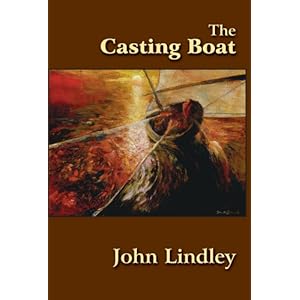
Of course these writers, especially Ginsberg, bring us closer to Bob Dylan who I’m looking forward to discussing with you. But before we do, can you fill me in on some of the milestones in your writing career? I know that you were recently the Poet Laureate for Cheshire and I am in the process of reading, and enjoying very much, your 2009    collection ‘The Casting Boat’. What would you say have been the significant points along the way for you?    


JL: In the 70s and 80s I'd had some measure of success in a couple of poetry competitions and been fairly widely published in magazines. All of that was encouraging, of course, but the first significant milestone, to my mind, was undoubtedly my first (properly) published collection. On two occasions, once in the early 70s (far too early in my own writing development) and again in the early 80s, I'd self-published pamphlets, but my collection Stills from November Campaigns, published in 1998 by Tarantula – a Manchester poetry press with, believe it or not, no Bob Dylan connection whatsoever – was a real lift. I'd suffered a long bout of writer's block from 1990 – 1996 in which I'd barely written anything, but that collection came after a particularly prolific 18 month period and one in which I was trying very hard to reconnect with the poetry scene: performing at open mic's, submitting work, going out again to see other poets, etc. Each published collection since that first  has been a thrill, of course, and, yes, I'd have to list Cheshire Poet Laureate as a milestone too (albeit a fading one. It was back in 2004). Running workshops in Nairobi for a week and giving a reading over there was an unforgettable experience too. Obviously, all of these are personal milestones – significant, I'm sure, in no-one's estimation but my own! Poetry, and any of its attendant 'successes', don't figure too prominently on most people's radar, I'd think. What about you, Andy? What have you viewed as your writing milestones?


AM: Thanks John. And well done! As well as ability, obviously, and perseverance, I think it takes guts to live the writer’s, and especially the poet’s, life. You’ve used a quote from a headstone as a title of one of your poems – ‘Foolish enough to have been a poet’ – and, although there is parody here, I’m sure there will have been pressures on you at times to devote yourself to a ‘proper job’, pressures which can play havoc with the muse and the craft.
You ask about me. Well, I can never quite consider myself ’a writer’ although I have written and published quite a bit over the years, most of it in my career as an educational psychologist. I’ve been very fortunate to have been a member of a profession that sets pretty high store by folks debating, writing and publishing and there have been a number of very gratifying milestones along the way. In terms of my ‘other writing’, well, pretty much all of it, apart from the really awful doggerel, is in ‘While Giants Sleep’, the subject of this Blog. I was staggered to win the Yeovil Poetry Prize last year and back twenty years or so ago to have been commended in another couple of competitions. My little book ‘Hanging in the Balance’ received a couple of stunning reviews in the climbing press around that time too from well respected writer/climbers, so that was amazing for me.
One little ambition of mine had always been to have something published about Bob Dylan. I’d tried to write a poem once, in the late 60s or early 70s, and it was truly ghastly. Awful. But I did get the opportunity in the late 90s to contribute a chapter to an American book and that is also included in ‘Giants’. I’m aware I took the easy option, along the lines of ‘what BD has meant to me’ rather than something more critical or original, but when I thought about it I realised I had nothing really to offer in those respects that had not already been said. You have written about Dylan over a long time span, can you say something about the origins and early days of your interest?
JL: I watched Dylan's broadcast concert for the BBC, split over two successive weeks, in 1965. I knew nothing of him before that other than the fact that he'd written some of the songs Peter, Paul and Mary and Joan Baez performed on records owned by my older sister. I remember really liking what I heard and saw in those broadcasts but it wasn't until 1969 that Dylan's hook became truly embedded in me. That year I read the major interview he did with Jann Wenner in Rolling Stone magazine – an issue that also contained Greil Marcus' wonderful article on Dylan bootlegs. I began, as fast as my limited income at the time would allow me, to buy Dylan's back catalogue of albums. By, I guess, the Pat Garrett and Billy the Kid soundtrack album, I was pretty much up to date and subsequently have bought the albums as they've appeared.


AM: So much has been said and written about Dylan, too much in some quarters in my opinion, and yet I still find his work and much of the discussion of it, compelling. I have had periods of disillusion. I’ll admit it, I was one of those who thought at the time that going electric was an ideological crime (‘I was so much older then ...’) and the stridency of his Born Again Christianity in Regan’s America I found very hard to swallow on early listening. But I always find myself coming back, catching up with his changes of direction, and eventually becoming awed all over again by his art. Not all of it necessarily, but a good proportion of his half a century of output.
I started this conversation by referring to your writings about Dylan. Can you give an outline of these, and if that leads to you saying more about the nature of that ‘embedded hook’ so much the better.   


JL: Given my long-term interest in Dylan, surprisingly little of my poetry has referred to him. I read at Congleton Library in late 2010 as part of a celebration of Dylan in poetry and song and found myself having to specifically write a poem for inclusion as I had nothing (at least nothing new and of any worth) of my own to offer!
My article writing on Dylan started with a piece published in Endless Road magazine in 1982. Over the years, occasional articles have been published in Look Back, Isis and The Bridge. My most concentrated period of article writing was between 1984 and 1994 for the Dylan magazine The Telegraph, although my output was nothing like as prolific as some of the other regular contributors. Most of my pieces were actually requested (I'd say 'commissioned' but there was no payment involved) by the editor of The Telegraph, John Bauldie. After 1994 I wrote nothing further on Dylan (apart from the editorial for Telegraph 56 in 1997, along with other work on that issue to complete the final edition following John's death) for 12 years. This was a deliberate attempt by me, following the poetry writing block I mentioned earlier, to turn my writing away from Bob Dylan and put the focus back on my own poetry (although I certainly wouldn't seek to attribute blame for my 5 year fallow poetry period on the distraction of Dylan!). Like you, Andy, I guess I was believing that too much was being said and written about him (“Too much information about nothin' – too much educated rap.”) and I no longer felt like adding to it.


AM: Thank you for this, John, and especially for bringing together the final issue of The Telegraph following John Bauldie’s tragic death. I have read some but not all of your other pieces on Dylan and, since we’ve met in person last year via a new Dylan Interest Group, I look forward to being able to hear and read more. I wonder whether we can stick with him for just a little longer before concluding this conversation? Over the years I’ve enjoyed sharing my interest in Dylan’s work, and my enthusiasm for it, with various mates. And I suspect that I am not alone in having had to also put up in other quarters with a healthy amount of teasing, sometimes a pitying regard and even the odd spot of anger and vitriol. I accept that this goes with the territory but about 10 years ago a bright but puzzled postgraduate student said to me “Bob Dylan? Did he sing ‘Candle in the Wind’?” It was then I knew that as a society we were failing in our task of cultural transmission, that Ofsted needed to come down even harder on our educational institutions and that I myself had said too little on the topic rather than too much. So, and seriously, if you had 250 words or so to tell this student why Bob Dylan is both important and potentially so enjoyable, what would you say?      


J.L. Wow! OK. Please allow me though, before getting to my 250 words, to add something to your 'cultural transmission' fear. I'm a lover of older movies – silent era to the early 50s – and, having amassed around 50 poems of mine on the subject of 'cinema' I made, around 10 years ago, approaches to a couple of poetry publishers to gauge their interest in a themed collection. The response from one of them on reading the work was “We like these poems but wonder who, in this day and age, will have heard of Fatty Arbuckle?” Here in 2012, I'm beginning to ask whether we're that far removed from fielding the question “Who has heard of James Dean and Marilyn Monroe?”, such is the current temporary nature of fame and shortness of memory.

A get-out: Sorry student, I can't sum up Dylan's importance and the enjoyment that can be derived from his music in 250 words. I can't do that any more than I believe an understanding and appreciation of this brilliant and multi-faceted performer and songwriter can be summed up in one, or even half a dozen, of his albums. That, in itself, is a measure to me of the range, uniqueness and epic qualities of this artist. He is both sparklingly original and deeply informed about, and indebted to, the art of others who went before him. He has been, for long periods of his career, a truly mesmerising, dazzlingly inventive performer and has also been (I have no reservations in adding this) one of rock, folk and blues music's finest singers. Like any serious (and a damn funny one at times too!) artist, Dylan repays long and careful investigation. If that sounds a chore, it shouldn't. A more rewarding and richly enjoyable study would be hard for me to imagine. His songwriting output is vast and sometimes flawed. The shifts in his musical direction can be baffling and questionable. But whilst his contradictions can be maddening, his risk-taking is admirable. That he is a compass to others in song and literature is a bonus. You can listen to Bob Dylan in interview and song and leave and explore in every direction. That he can be mentioned, without apology or qualification, in the same breath as 20th (and 21st ) century songwriters like George and Ira Gershwin, Irving Berlin, Cole Porter, Woody Guthrie, Hank Williams, Lennon and McCartney, Leonard Cohen, Tom Waits and others is testimony to his standing. That he may just be the greatest songwriter of them all may be debatable but it's by no means laughable.
I think I've exceeded my 250 words. Told you.


AM: Wow again! What a superb summation! Next week’s lectures are all cancelled, bring your record players instead!
John, thank you so much for your time and attention to this interview. I’ve really enjoyed it. I hope readers – and my little blog counter indicates that people are reading these interviews – will be enthusiastic about seeking out your work. I can thoroughly recommend The Casting Boat and look forward to getting to know your other work. I’m including here your website address where people can find details of your publications and how to order them, as well as news of your various performances and workshops:    


Good luck!                                                                                                                                                                                                                                                                   

Friday, 23 March 2012

Extract from 'Around Annapurna'


I remained outside later than everybody else. It may have been sensible to settle at dusk, to get into a good trekking routine, but I needed to feel the thickness of the air on my face and to touch the baked ground of an unfamiliar continent. I was drawn towards the village’s single room dwellings. Through the open doorway I saw two bundles on a trestle table, the tops of tiny human heads and the tightly swaddled blankets around their infant bodies. There was no other furniture except the saucepans on the wall and I assumed that their parents were sitting out of view on the floor near the candle.

There was something reassuring in the austerity of the clay, wood and metal and it gave me the confidence to wander alone for a mile or so along the track alive with clicking, trills and whistles from unseen mouths.

As we approached each village on subsequent days, we were greeted by clasped hands and bowed heads, - from women at their pots, toddlers in filthy vests and wellingtons, or whoever


‘Namaste!’ they said, meaning ‘I salute the God within you!’ 


We were careful in our responses and easily drawn into the sincerity of the ceremony.

(nb. 'While Giants Sleep' does not contain photographs. These have been included only for the purposes of this blog. Photographs are taken from Google Images ) 

Saturday, 10 March 2012

Conversation with David Duncombe

AM. It is almost thirty years since I moved into a house in Matlock and found that living just down the road from me was an accomplished and published poet. Our conversations over the intervening years have certainly motivated me in my writing and I've also benefited from your critical reading of various drafts of things I've written. I'm wondering about the origins of your literary interests. Were you from a 'bookish' household or were there any particularly inspiring teachers in your schools?   
     
DD: There were few books in my very happy working-class home, but my rigorous primary school encouraged us to join the local library.  Once it was clear that I was a keen reader, my parents bought me books like the Books of Knowledge (a kind of encyclopaedia) and The Empire Youth Annual, which I still have.  
I started school in wartime and loved stories of adventure, travel and combat.  None of them seemed to feature people from my background, however, so I never felt qualified to write anything like them.  In the first wave of 11+ children at grammar school, I was certainly inspired to learn, but not to write creatively.  At university, reading English in the era of F.R. Leavis and L.C. Knights, I became a trained critic, able to recognise good writing.  The poet of the time was T.S Eliot, someone else with whom I had little in common.  Only my own years working in Africa, the army and the RAF gave me the confidence to realise that I now lived in the world that I had previously only read about, plus the view that any walk of life had its interest.  In my late thirties I then wanted to write, but it was a broad ambition and an idea could as easily be for a novel, a play, a short story or a line in a poem.

AM: David, you have already raised a number of interesting avenues I would like to explore. Perhaps firstly we could talk about class? Like you I came from a working class background – the respectable end of our council estate, mind you – and went to the town’s grammar school. However, unlike you, I found the formal study of literature impossible, an alien experience. At an earlier age, I’d devoured the ‘populist’ Famous Five, William and Biggles books, and loved our public library, but I didn’t have the patience or application for the more ‘improving’  hardback ‘ Childrens’ Classics’ that kindly aunts sometimes bought me as Christmas presents. By adolescence I was struggling with, and in the main part rejecting, what I, at the time, judged to be reading matter for ‘posh’ and conformist kids. I’m curious about what you think it was about your experience or you yourself that held you into the academic study of literature? (Conversely, of course, I’m curious as to what it was about me and mine that, at that age, didn’t).        


DD: I grew up in Coventry, a ‘boom’ town of car factories and well-paid workers hopeful that their children would not follow them on to the assembly line. 
I had no specific ambition, apart from wanting to travel away to places I had only experienced in film and books.  I read the Biggles and Just William books too and those boys’ papers like Hotspur, which were also full of adventure, often featuring public school types.  
I was not technically or scientifically minded, but found myself enchanted in the world of literature and history.  Dickens, of course, was no more distant from my generation than Lawrence is to the present one and of course was not, in his own time, a ‘classic’ writer, but rather widely read and extremely popular.  Perhaps I was ‘conformist’ in a way, but I think conformist to the new post-war working-class movement in which we felt we were as good as anyone else and the good things, literature included, should be accessible.  Only a narrow part of my education was in school, since much of my life was church-based: scouts, choir, altar service, youth club, sport.  I was confident in these areas and further encouraged to learn.  The King James Bible was certainly an early introduction to the beauty of language.  Paradoxically, I think I was fortunate not to have been exposed to any vocational guidance, and so stayed open-minded until after university and National Service 

AM: I see why we have no problem conversing for a whole day whilst out walking, we share a strong enthusiasm for some interests and have some similar influences whilst also having had interestingly diverse life experiences in other respects. I too loved those boys’ papers like the Wizard and the Hotspur and, although I’ve long been distancing myself from religion, the language of the King James Bible has been popping up unbidden in my thoughts since my first acquaintance with it in childhood. I find it interesting that you didn’t want to write until your late thirties – ‘the famous novelist with the uncontrollable compulsion to produce stories since very early childhood’ seems to be such a cliché these days - and I understand the rationale you have outlined. Did your relatively late start mean that you were able to by-pass the embarrassing ‘early works’ adolescence (and beyond) of many writers? Can you say a little about your early efforts and publications?


DD: Yes, I recognised good writing for what it was, but simply lacked the self-confidence to produce my own work.  Then I met my wife Shirley, left the RAF, became more politically aware, and my life, which had previously been exciting and enjoyable, also became a time of change and greater possibilities.  I started to write poetry and from the beginning, I had some success in publishing my poems in the local newspaper, magazines and like you, Andy, enjoying success in competitions.  I remember a magazine called Ostrich, which I think was quite political.  I still enjoy competitions because of the anonymity of the judging.  Because I was a late starter, I suppose I had plenty to write about.  And I continue to write poems based on events from years before, recorded briefly in notebooks and diaries, finding that the important issues stay fresh and other detail happily fades away.  The topics came from all quarters: nature, love, sport, social situations.  A year or two after I started writing poetry, I tried my hand at stories and drama; in fact the ideas came thick and fast and at first I didn’t know if a new idea would become a line in a poem, or in fact a novel.  I wrote two novels, both published, for children before I found that it was not a good way for me to escape from my day job as a teacher.  The main successes with my drama and short stories were with the BBC, whom I can’t praise enough as an organisation which does give new writers a chance.  I had enormous energy, having great enthusiasm for my work in a good progressive comprehensive school, a young family, a busy political and social life – and the ability to get up at 5 a.m. like Anthony Trollope and write for a  couple of hours before the rest of the day’s activities.

AM: Great stuff, David. Unlike Trollope and yourself and one or two others I’ve known, I’ve never been able to be coherent or even alert in the very early morning. I do agree about the virtues of competitions. My own achievements in this respect, although fairly modest, have been a terrific boost to my sense of myself as a writer and competitions do allow ‘beginners’ to submit work under the cloak of anonymity with confidence that it will be considered fairly alongside the offerings of the great and the good. Additionally, I suppose, success can tell established poets that their work is still considered of high merit and that they are not merely riding on their reputation.
Can we go back to youngsters and literature? After the RAF, you became an English teacher, and later a head teacher, committed to the comprehensive ideal. I’ve said above that I didn’t really switch on to literature at my grammar school and I accept that that may have been more about me than my teachers or the curriculum. May have been. So I wonder, looking back, how you view the success of your endeavours in this respect? Do you have any views on continuing educational developments especially in relation to kids and literature nowadays? What advice would you give to somebody like your younger self just starting out as an English teacher?  

DD:  “Don’t start from here!” I’d have to say.  The modern curriculum, with its centrally directed platitudes from people who simply do not know the vast majority of children, is simply crippling.  Inspired teachers have always brought their enthusiasms to the task.  I do not think it matters what those enthusiasms are, but they will always transfer.  For me the answer was to encourage students, from eleven-year-olds with learning difficulties to Cranwell cadets, to write about themselves, to find the poets inside themselves.  I would let them write without hindrance: there were other times and places to correct grammar to teach conventional sentence construction (and I cared very much about those things too).  A touch of Kes, I suppose, but it works.  The computer can help – children who have physical difficulty in writing, spelling and so forth can still get their thoughts down.  I would tell them not to worry at all about punctuation, but to use line breaks.  Creative expression was vital and achieved so well through poetry and drama.  In fact, the spelling, grammar and punctuation would follow successfully when the pupils had something they actually wanted to say.  The other point is that young people who regard themselves as poets/writers do not feel excluded from the world of literature.  The teacher, naturally needs to introduce them to books they will relate to, in the first place.  The two children’s novels I had published both centred on children from ‘ordinary’ backgrounds: a boy on a council estate who becomes an amateur boxer; another who belongs to an airforce family and gets lost overseas.  Not all children are drawn to fantasy or historical novels; they need to start nearer home.  The rest will follow.  Oh dear, the years of retirement seem to have melted away.  Sorry for the lecture.  I’m particularly sad that inspired teachers are no longer allowed to choose the literature for the English syllabus in the old Mode III way.  We did that because we respected literature and wanted the best for children, which was not some watered down version of what happens in public schools, but something vital and relevant and likely to lead towards the classics rather than away from it.  Time I stopped.

AM: Stirring stuff, David. Good to hear it. Let’s find a barricade and go man it. I worked as a teacher briefly for Alec Clegg in the old West Riding forty years ago and loved his view that teachers needed to be nurtured and encouraged to become artists themselves. So, we were frequently given help to become better painters, musicians, writers, dancers(!), in the belief that if our enthusiasm was genuine then it would transfer to kids. Technique, the discipline of the craft, could then be more easily learned once driven by a genuine creative pride. What a long way from today’s centrally prescribed curriculum and the interminable, Ofsted-fearing box-ticking.
I started this conversation by referring to the help you have given me with my writing over the years. I still have some early drafts of pieces from ‘Hanging in the Balance’ with your pencilled comments on them. Looking at them now I realise even more how helpful they were to me, both in terms of improving those pieces then  but also in terms of teaching me broader principles that I’ve continued to benefit  from – cutting out excess verbiage, not being pretentiously ‘creative’, reigning in a tendency towards too much obscurantism. Also, trusting my own judgement more once I’ve given a piece its final, very critical read through. You’ve continued to help less experienced writers in various ways. Could you say a little about your activities in this respect and, if you can, about the sorts of help you find adult writers need and seem to benefit from?        

DD:  Adult writers have two advantages:  life experience and the motivation to express themselves.   Having something worthwhile to say is the first requirement, whether it is an unusual narrative, observation of a relationship, the impact of something in the natural world or powerful emotion.  All of us are moved in these ways, but aspiring to be an original and effective poet is a huge ambition.  When I have run workshops my first advice has often been to write down your thoughts on the supposed subject (it can often change in the process) quite rapidly, with little thought as to line length or indeed any of the crafting process.  It is surprising how much can come out.  Then you can think about shape, sound, exact vocabulary.  We are all generally better at editing and correcting than getting things right first time.   
Obviously there’s not room here for the kind of compendium of advice that so many tutors and literary advisors have produced, but there are one or two pointers.  One is to cut out anything which tries to explain events or emotions already expressed: you must leave the intelligence of the reader to find a meaning; a degree of mystery is always beguiling.  I don’t understand the intricacies of climbing, for instance, but love your use of the technical terms – they add authenticity – and your climbing pieces are complete metaphors in themselves for the challenging events and relationships that the reader can apply them to. 
Also, I like to see poems with concrete language, i.e. not ‘cruelty’, ‘passion’, ‘love’, ‘unhappiness’, but actions, observations that show these processes.   Often poets want to comment on important public issues: I advise an oblique approach.  If you write directly about e.g. political events, you may for a short while be topical, but it will soon date.   And you would need an extraordinary talent to write directly about say, the Holocaust or a war you had not experienced, though you may have material about a survivor or a historic place you have visited which could provide a poem or story.  You can often make a breakthrough when a piece of work doesn’t seem right, by changing from first to third person or vice versa.  If you are putting down an experience you have directly experienced, making the narrator ‘he’ or ‘she’ can provide freedom to achieve a poetic truth rather than the narrow historical one you started with. 
I’ve said nothing about submitting work to magazines and publishers, but honestly I think that would have to be very specific advice to an individual to be effective.  There are general tips in all the guidebooks.   I could go on, but will end by simply advising any writer to make sure to share their work with somebody along the way.  I still have a monthly workshop with two accomplished poets whose opinion I trust.  Sometimes your strengths and weaknesses show themselves simply in the process of reading the poem aloud. 

AM: Thank you so much for all of this, David. I hope that others reading this interview, whoever they may be, can gain some of the benefits that I have had from our conversations over the years. I hope also that others will want to seek out your work if they are not already familiar with it and I am including here a link to your latest publication, ‘Borders, Baggage’:    


The image of Major Cheung in the park early morning with colleagues from his old military days alongside the calligraphers with their evaporating characters seems both strong and wistful and a good one with which to conclude. Thank you.